
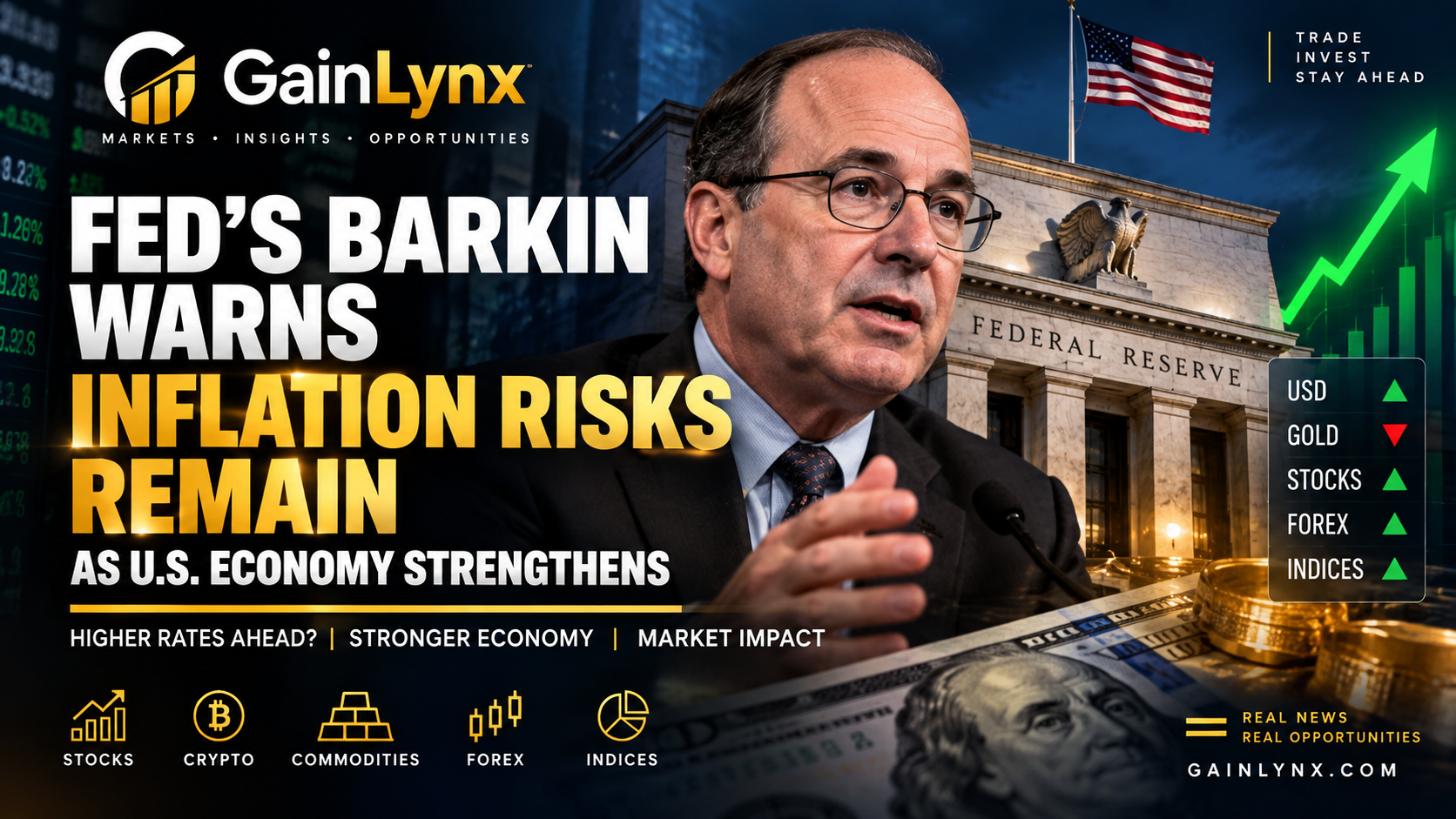

Richmond Federal Reserve President Tom Barkin said Tuesday that the U.S. economy appears to be strengthening, while persistent inflation remains a key concern for monetary policymakers.
His comments reinforce expectations that the Federal Reserve could keep interest rates elevated and potentially consider additional rate increases if inflation fails to move convincingly toward the central bank’s 2% target.
U.S. Economy Shows Signs of Strength
Barkin said U.S. economic conditions appear to be firming, supported by continued consumer spending and signs of momentum extending beyond the artificial intelligence boom.
He pointed to strength across several areas of the economy, including manufacturing, defense and healthy banking pipelines.
A resilient economy can complicate the Federal Reserve’s inflation fight because stronger demand may keep upward pressure on prices even as policymakers attempt to cool inflation through higher borrowing costs.
Inflation Remains the Fed’s Main Concern
Barkin argued that inflation risks currently outweigh risks to maximum employment, helping explain the Federal Reserve’s latest decision to raise interest rates.
The central bank increased its benchmark policy rate by 25 basis points last week, bringing the target range to 3.75%–4.00%.
The move came as policymakers continue working to bring inflation sustainably back toward the Federal Reserve’s 2% target.
Inflation Pressure Goes Beyond Energy
One important message from Barkin’s remarks was that inflation pressures may no longer be explained primarily by temporary energy, tariff or other supply-related shocks.
Strong demand across the broader economy could also be contributing to persistent price pressures.
Barkin noted that a significant portion of the Personal Consumption Expenditures Price Index is increasing at an annual rate above 3%, suggesting inflation remains broad enough to keep policymakers cautious.
Could the Federal Reserve Raise Rates Again?
Barkin did not commit to a specific path for interest rates and left open the question of whether additional rate increases will be necessary.
That uncertainty will keep upcoming inflation, employment and economic growth data firmly in focus for financial markets.
Barkin is not a voting member of the Federal Open Market Committee in 2026, but his comments provide additional insight into the inflation concerns being discussed across the Federal Reserve system.
What It Means for Financial Markets
Expectations for higher interest rates can influence nearly every major financial market.
Higher U.S. yields can provide support for the dollar, while assets such as gold may face pressure when investors expect interest rates to remain elevated for longer.
Stocks can also react to changing rate expectations because higher borrowing costs can affect corporate financing, economic activity and the valuation investors assign to future earnings.
For forex traders, changing expectations around Federal Reserve policy can create significant moves in major U.S. dollar currency pairs.
What Investors Should Watch Next
Markets will now closely monitor upcoming U.S. inflation reports, labor-market data and comments from additional Federal Reserve officials.
Evidence that inflation remains persistent could strengthen expectations for further monetary tightening, while clearer signs of cooling price pressures could reduce the need for additional rate increases.
With economic activity remaining resilient, the balance between growth and inflation is likely to remain one of the most important drivers of U.S. financial markets.
Source
This article is for informational purposes only and does not constitute financial or investment advice.
