
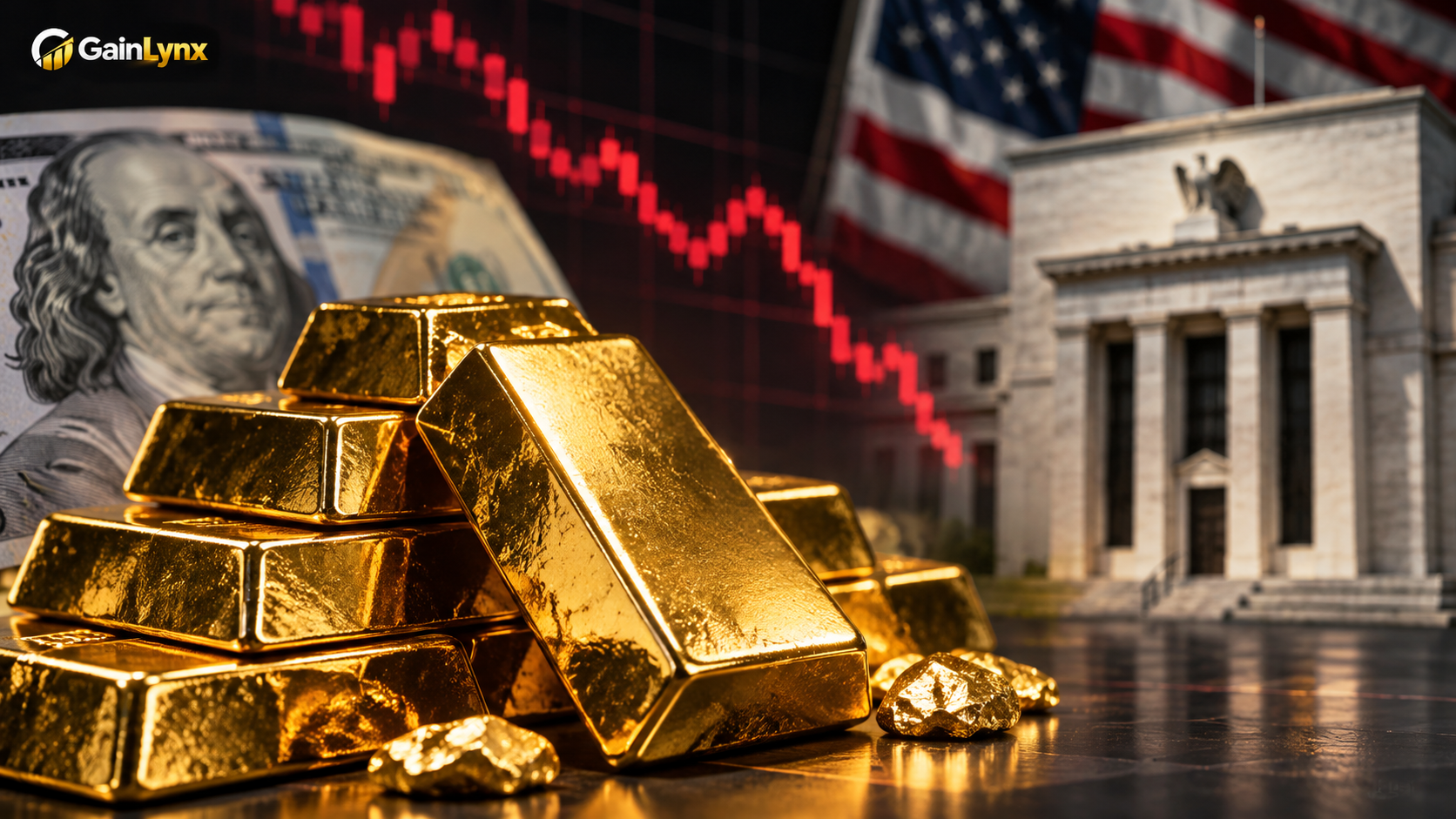

Gold prices tumbled to their lowest level in more than a year on Monday, November 16, 2026, as a stronger US dollar and growing expectations of further Federal Reserve interest rate hikes weighed on the precious metal.
Spot gold fell 0.6% to $3,855.87 per troy ounce by 09:37 GMT, after touching an intraday low of $3,830, its weakest level since October 2025, according to Reuters. US gold futures for December delivery declined 0.7% to $3,860.10.
Why Are Gold Prices Falling?
Three closely connected forces are pressuring bullion: a resilient US dollar, expectations of tighter monetary policy, and elevated bond yields.
Gold is priced internationally in US dollars. When the dollar strengthens, bullion becomes more expensive for investors holding other currencies, potentially reducing demand.
Meanwhile, gold does not generate interest income. Higher interest rates and attractive yields on government bonds can therefore increase the opportunity cost of holding the metal.
The US dollar was trading near its strongest level since April 2025, adding to pressure on precious metals.
Federal Reserve Rate Hike Expectations Intensify
Investors have become increasingly concerned that persistent inflation will require the Federal Reserve to maintain a restrictive monetary policy stance.
Kansas City Fed President Jeff Schmid warned that inflation remained too high, reinforcing expectations that further action may be necessary. Other Federal Reserve officials have also signaled concern about continuing price pressures.
According to market-implied probabilities reported by Reuters, traders assigned approximately a 91% probability to a 25-basis-point interest rate increase at the December meeting, with a 9% probability of a larger 50-basis-point move.
These probabilities are market expectations rather than commitments by the Federal Reserve and may change as new information becomes available.
Gold’s Latest Price Movement
- Spot gold: $3,855.87 per ounce, down 0.6% at 09:37 GMT.
- Intraday low: $3,830 per ounce, the weakest level since October 2025.
- December gold futures: $3,860.10, down 0.7%.
- December Fed expectations: 91% probability of a quarter-point hike, according to the market pricing cited by Reuters.
The figures represent a snapshot of Monday’s trading session and should not be interpreted as live prices.
Why Inflation Is Creating a Difficult Environment for Gold
Gold is often considered a hedge against inflation, but its relationship with rising prices is more complicated than it first appears.
When inflation rises, investors may buy gold to preserve purchasing power. However, if inflation prompts the Federal Reserve to raise interest rates aggressively, higher real yields and a stronger dollar can outweigh that potential support.
Recent US inflation figures have encouraged investors to reassess the likely path of monetary policy. Reuters reported on November 10 that stronger-than-expected consumer inflation had contributed to a sharp decline in gold as the dollar and yields advanced.
What Investors Should Watch Next
1. Federal Reserve Chair Kevin Warsh’s Remarks
Markets are watching comments from Fed Chair Kevin Warsh for further insight into how policymakers assess inflation, economic growth, and the need for additional interest rate increases.
2. October FOMC Meeting Minutes
The minutes of the Federal Reserve’s October policy meeting, scheduled for Wednesday, November 18, could offer more detail about the balance of views within the central bank.
3. US Dollar and Treasury Yields
A sustained rise in the dollar or inflation-adjusted Treasury yields could maintain pressure on gold. Conversely, a retreat in either could provide room for a recovery.
4. The $3,830 Price Area
Monday’s intraday low near $3,830 is an important recent reference point for traders. A sustained move below it could signal additional weakness, while stabilization above it could suggest that selling pressure is easing. This is a scenario to monitor, not a guaranteed technical outcome.
Silver and Other Precious Metals Also Decline
The selling pressure extended beyond gold. Reuters reported that spot silver declined 2.7% to approximately $47.40 per ounce, while platinum fell 1.9% to $1,465.43 and palladium dropped 1.4% to $986.52.
These declines illustrate how changing interest rate expectations and currency movements can affect the broader precious metals market.
Can Gold Recover?
Gold’s near-term outlook depends heavily on the interaction between inflation, interest rate expectations, the US dollar, and investor demand for safe-haven assets.
A less hawkish Federal Reserve outlook or a weaker dollar could help bullion regain momentum. On the other hand, persistent inflation and further increases in expected interest rates could extend the current pressure.
Geopolitical uncertainty and longer-term diversification demand may still provide support, but neither guarantees an immediate recovery.
Final Thoughts
Gold’s decline to $3,830 marks a significant moment for precious metals markets. The move reflects a broader repricing of US monetary policy expectations rather than a single isolated market event.
For investors and traders, the key developments to monitor are the Federal Reserve’s upcoming communications, movements in the dollar and Treasury yields, and whether gold can stabilize after reaching its lowest level in more than a year.
Stay informed with GainLynx for financial market news, gold analysis, and updates on global economic developments.
Sources
- Reuters — Gold hits over one-year low on resilient dollar as hawkish Fed bets build (November 16, 2026)
- Reuters — Rate-hike bets keep gold on track for worst week in four months (November 13, 2026)
- Reuters — Gold falls nearly 3% as CPI tops forecasts, lifting dollar and yields (November 10, 2026)
Disclaimer: This article is for informational purposes only and does not constitute financial or investment advice. Market prices and expectations can change rapidly.
