
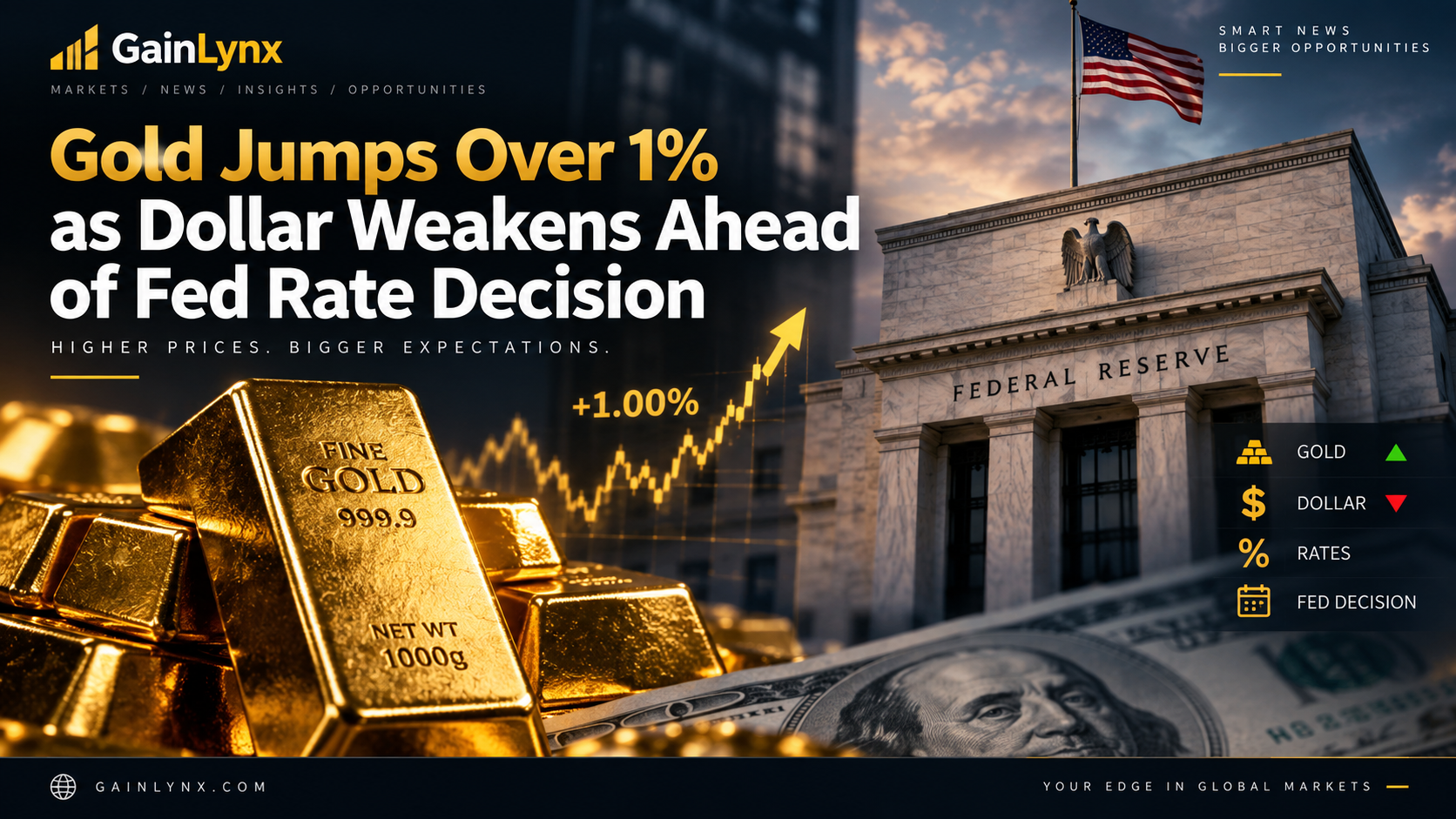

Gold prices climbed more than 1% on Wednesday as a softer U.S. dollar, easing oil prices and lower Treasury yields supported demand for the precious metal ahead of a closely watched Federal Reserve interest rate decision.
Spot gold rose to around $4,348 per ounce during the session, recovering further from the more-than-one-month low reached earlier this week. U.S. gold futures also advanced as traders positioned themselves for what could be a major catalyst for global financial markets.
Why Is Gold Rising Today?
Several factors are supporting gold prices ahead of the Federal Reserve announcement.
The U.S. dollar weakened after recently trading near multi-week highs. Because gold is priced in dollars, a softer greenback can make the metal more attractive to buyers using other currencies.
Treasury yields also pulled back from recent highs, reducing some of the pressure on non-yielding assets such as gold.
Oil prices, meanwhile, cooled following a two-day rally. Lower energy prices can ease concerns about additional inflationary pressure, which has become increasingly important for expectations surrounding U.S. monetary policy.
All Eyes on the Federal Reserve
The Federal Reserve is expected to announce its latest interest rate decision later Wednesday.
Financial markets are heavily pricing in at least a 25-basis-point increase in interest rates. Investors will therefore be watching not only the rate decision itself, but also the Fed’s guidance on the future path of monetary policy.
Comments from Federal Reserve Chair Kevin Warsh following the announcement could be particularly important.
A more hawkish message suggesting that additional rate increases remain likely could push Treasury yields and the U.S. dollar higher, potentially creating renewed pressure on gold.
A less aggressive policy outlook, however, could provide additional support for bullion.
Why Interest Rates Matter for Gold
Gold does not generate interest or yield.
When interest rates and bond yields rise, investors can receive higher returns from interest-bearing assets such as government bonds. This can increase the opportunity cost of holding gold.
Conversely, falling yields and a weaker dollar often provide a more supportive environment for precious metals.
However, monetary policy is not the only factor influencing gold. Concerns surrounding inflation, geopolitical uncertainty, government deficits and confidence in major currencies can also increase demand for hard assets.
Silver and Other Precious Metals Rise
Gold was not the only precious metal moving higher.
Silver gained strongly during Wednesday’s session, while platinum and palladium also advanced.
The broader move suggests investors are closely monitoring both monetary policy expectations and developments across commodity markets.
What Happens Next for Gold?
The Federal Reserve decision could determine gold’s next major short-term move.
Traders will likely focus on three things: the size of any interest rate change, the Fed’s guidance on future policy, and Chair Kevin Warsh’s comments during the press conference.
If Treasury yields and the dollar strengthen following the announcement, gold could face renewed selling pressure.
If yields retreat or the Fed signals a less aggressive tightening path than markets expect, gold could receive additional support.
With monetary policy uncertainty elevated and global markets already experiencing volatility, gold is likely to remain highly sensitive to developments from the Federal Reserve.
