
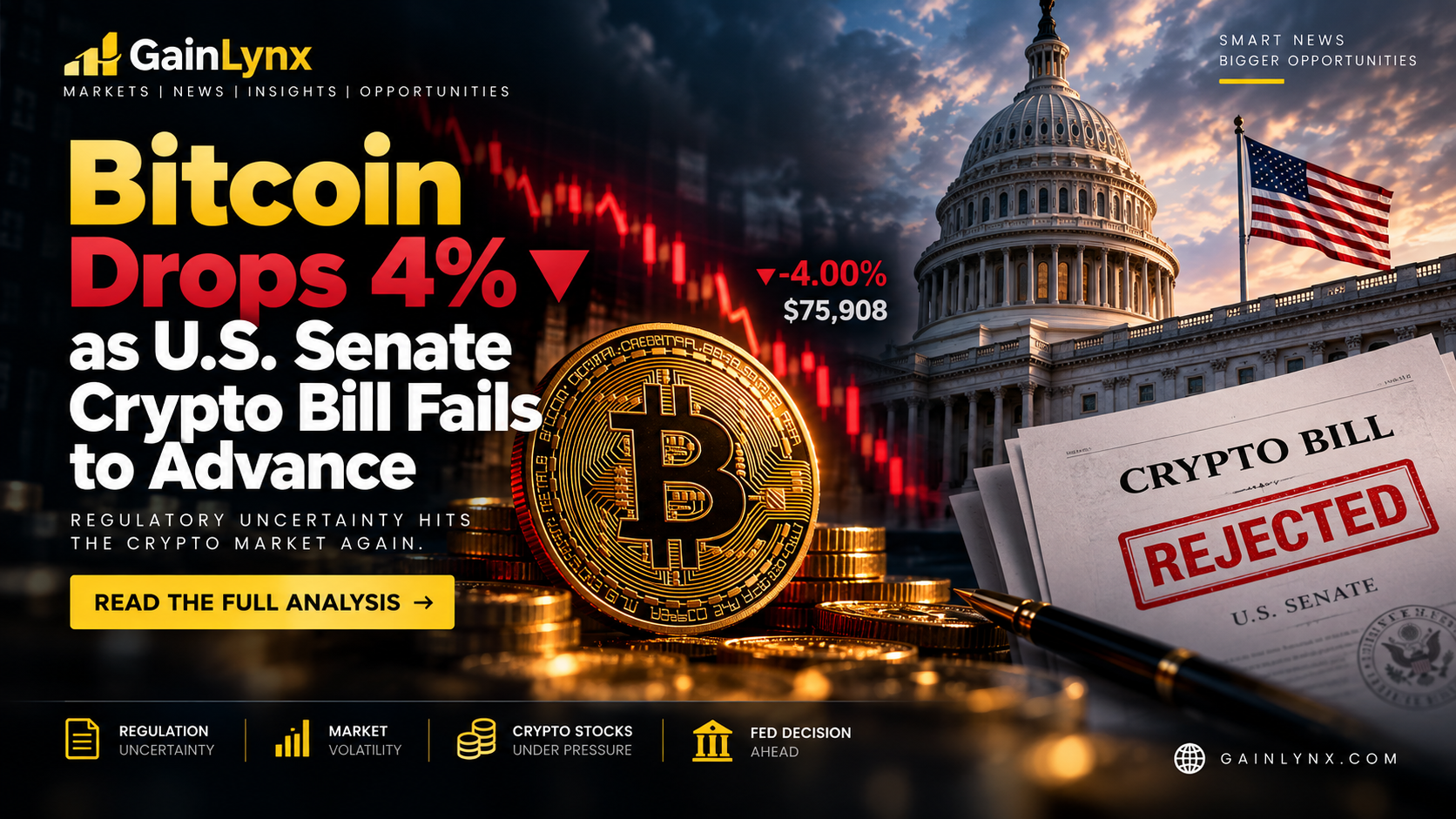

Bitcoin came under renewed pressure after the U.S. Senate failed to advance major cryptocurrency legislation, adding another layer of uncertainty for digital asset investors already navigating a volatile macroeconomic environment.
The world’s largest cryptocurrency fell about 4% to around $75,908 following the Senate vote, while several crypto-related stocks also suffered sharp losses.
Why Did Bitcoin Fall?
The latest decline followed the Senate’s failure to advance comprehensive legislation designed to establish clearer rules for the U.S. digital asset market.
The bill needed 60 votes to move forward but fell short of that threshold, delaying an effort that the cryptocurrency industry had spent months supporting.
For investors, the failed vote means regulatory uncertainty surrounding the U.S. crypto market could persist for longer than previously hoped.
Crypto Stocks Also Come Under Pressure
The market reaction extended beyond Bitcoin.
Shares of major cryptocurrency companies including Coinbase and Circle Internet Group fell sharply following the Senate setback, with both stocks down around 9% during Tuesday’s session.
The declines highlighted how closely investors are watching Washington as lawmakers debate the future regulatory framework for digital assets.
What Is the CLARITY Act?
The Digital Asset Market CLARITY Act is designed to create a clearer regulatory framework for cryptocurrencies in the United States.
Among its major goals is clarifying the respective roles of the Commodity Futures Trading Commission and the Securities and Exchange Commission in overseeing different parts of the digital asset market.
Supporters argue that clearer rules could provide greater legal certainty for cryptocurrency companies operating in the United States.
However, lawmakers have disagreed over several provisions, including ethics rules, illicit-finance safeguards and the potential impact of stablecoins on the traditional banking system.
Bitcoin Faces Another Major Test From the Federal Reserve
Regulation is not the only issue affecting Bitcoin this week.
Investors are also preparing for the Federal Reserve’s latest interest rate decision, which could trigger significant volatility across cryptocurrencies, stocks, bonds and the U.S. dollar.
Higher interest rates can create pressure on risk-sensitive assets because investors may receive more attractive returns from bonds and other interest-bearing investments.
A more aggressive Federal Reserve stance could therefore create another headwind for Bitcoin, while a less hawkish outlook could improve sentiment across risk assets.
What Happens Next for Bitcoin?
Bitcoin remains near the $76,000 area after Tuesday’s sharp decline, leaving traders focused on both monetary policy and developments in Washington.
In the short term, investors will be watching whether Bitcoin can stabilize after the selloff and how the cryptocurrency market reacts to the Federal Reserve decision.
The longer-term regulatory debate is also far from over. The Senate setback delays the legislation, but debate over how the United States should regulate digital assets is expected to continue.
With regulatory uncertainty and major monetary policy decisions colliding in the same week, volatility across Bitcoin and the broader cryptocurrency market could remain elevated.
