
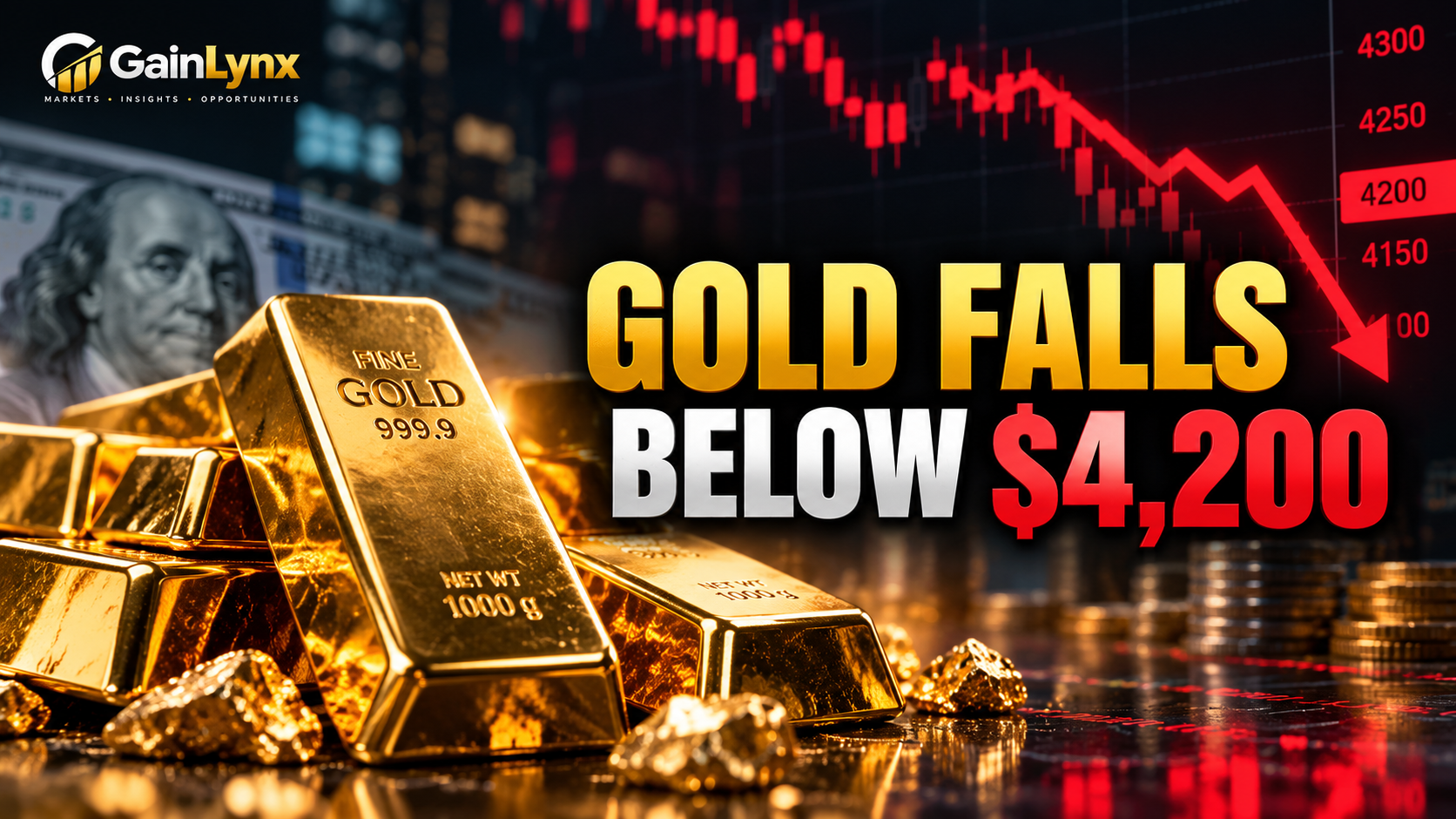

The gold price came under heavy pressure on Monday, September 28, falling below the closely watched $4,200-per-ounce level as investors reacted to a stronger U.S. dollar and expectations that interest rates could remain elevated.
Spot gold dropped more than 2% during the session, extending the metal’s recent decline after a difficult stretch for precious metals.
The move puts gold back in focus as traders weigh monetary policy, inflation risks, energy prices, and upcoming U.S. economic data.
Gold Price Drops Below $4,200
Gold started the week with a sharp move lower. During Monday’s session, spot prices traded below $4,200 per ounce after opening the day above $4,260.
The decline continued a broader pullback that has developed during September. Gold had traded around $4,370 per ounce on September 22 before losing ground over the following sessions.
As a result, traders are closely watching whether the latest move represents a short-term correction or a deeper shift in market momentum.
Why Is Gold Falling?
Several factors are putting pressure on gold at the same time. However, interest-rate expectations and the U.S. dollar remain two of the most important drivers.
Higher interest rates can make non-yielding assets such as gold less attractive compared with bonds and other interest-bearing investments.
Meanwhile, a stronger dollar can create another challenge. Because gold is priced in U.S. dollars, a stronger greenback generally makes the metal more expensive for buyers using other currencies.
Federal Reserve Expectations Remain Important
Federal Reserve policy remains a major theme across financial markets.
Recent market expectations have shifted toward the possibility that U.S. interest rates could remain higher for longer as policymakers continue to monitor inflation.
That matters for gold because the metal does not pay interest. Therefore, higher bond yields and tighter monetary policy can increase the opportunity cost of holding bullion.
At the same time, markets remain sensitive to any economic data that could change expectations for the Fed’s next moves.
Strong Dollar Adds Pressure
The U.S. dollar has also been an important part of the story.
When the dollar strengthens, commodities priced in dollars can face additional pressure. Gold is especially sensitive because currency moves can directly affect demand from international buyers.
For that reason, gold traders are watching both the metal itself and movements in the U.S. Dollar Index.
A change in dollar momentum could quickly influence sentiment across the precious-metals market.
Oil and Inflation Are Part of the Picture
Energy prices are another important factor for investors.
Higher oil prices can increase inflation concerns because energy costs affect transportation, manufacturing, and consumer prices across the economy.
Normally, inflation concerns can support demand for gold as a store of value. However, the relationship becomes more complicated when inflation also increases expectations for higher interest rates.
In that environment, the impact of tighter monetary policy can compete with gold’s traditional role as an inflation hedge.
Gold Has Pulled Back From Recent Highs
The latest decline follows a volatile period for the precious metal.
Gold traded around $4,370 per ounce on September 22. Since then, prices have moved lower as markets reassessed the outlook for U.S. monetary policy.
Monday’s fall below $4,200 therefore represents another important step in the recent correction.
Still, gold remains highly sensitive to changes in inflation expectations, geopolitical risk, bond yields, and currency markets.
Key Gold Levels Traders Are Watching
The $4,200 area has become an important psychological level after Monday’s move.
Below that level, traders may watch the session lows and other nearby price zones for signs of stabilization or continued selling pressure.
On the upside, a move back above $4,200 would put attention on whether gold can recover some of the ground lost during the latest decline.
These levels are market reference points rather than predictions. Short-term price action can change quickly as new economic information reaches the market.
U.S. Economic Data Could Drive the Next Move
The coming U.S. economic releases could be important for both gold and the dollar.
Investors will be looking for evidence about inflation, employment, and the broader strength of the U.S. economy.
Stronger-than-expected data could reinforce expectations for tighter monetary policy. In contrast, weaker readings could change how markets price the future path of interest rates.
As a result, gold could remain sensitive to economic headlines throughout the week.
What This Means for XAU/USD Traders
For XAU/USD traders, the current environment combines several powerful market drivers.
First, the direction of the U.S. dollar remains important. Second, Treasury yields and expectations for Federal Reserve policy can influence demand for gold.
In addition, energy prices and geopolitical developments can affect inflation expectations and risk sentiment.
Because these factors can move quickly, volatility may remain elevated around major economic releases and central-bank commentary.
What Markets Are Watching Next
Gold’s drop below $4,200 does not answer the bigger question about the metal’s longer-term direction.
Instead, investors are likely to focus on incoming U.S. data, movements in the dollar, Treasury yields, and signals from Federal Reserve officials.
Meanwhile, developments in energy markets could continue to influence inflation expectations.
Together, these factors will help shape sentiment toward gold and other precious metals in the sessions ahead.
Final Thoughts
The gold price started the week under significant pressure, falling below $4,200 per ounce as dollar strength and interest-rate concerns weighed on the market.
For now, the focus remains on the relationship between inflation, Federal Reserve policy, bond yields, and the U.S. dollar.
With important economic data ahead, gold traders will be watching closely for signs that could change expectations for monetary policy and trigger the next major move in XAU/USD.
Sources
- Reuters – Gold, U.S. Dollar and Federal Reserve Rate Expectations
- Moneycontrol – Gold Falls Below $4,200 on September 28
Disclaimer: This article is for informational purposes only and does not constitute financial or investment advice.
