
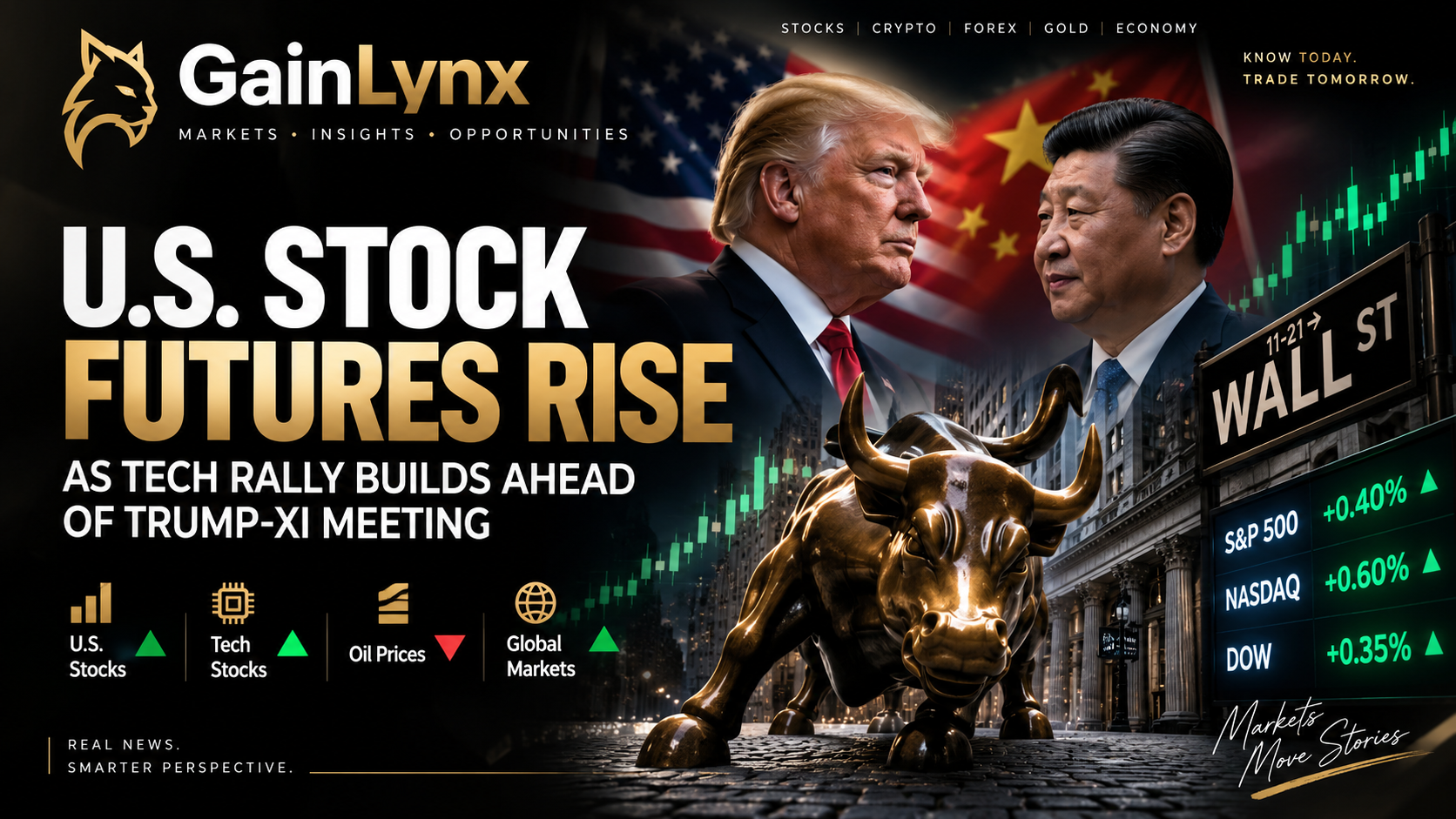

U.S. stock futures moved higher on Monday as investors started the week with a little more appetite for risk, helped by strength in technology shares and a pullback in oil prices.
Nasdaq futures gained around 0.6% in early trading, while S&P 500 futures were up roughly 0.4%. The move followed a positive session across much of Asia, where technology and semiconductor stocks were among the strongest performers.
But this is not shaping up to be a quiet week for markets.
Tech Stocks Set the Tone
Technology was once again at the center of the market’s attention. Asian chipmakers climbed on Monday as enthusiasm around artificial intelligence continued to support the sector.
South Korea’s technology-heavy market was particularly strong, while major semiconductor names across the region also advanced.
For Wall Street, that strength matters. Technology has been one of the biggest forces behind equity-market moves, and investors will be watching closely to see whether the early momentum carries into the U.S. session.
Falling Oil Gives Markets Some Breathing Room
Another source of relief came from the energy market.
Oil prices moved lower as traders assessed signs of improving supply flows from the Gulf. The decline matters well beyond energy stocks: expensive oil can feed inflation, complicate the outlook for interest rates and squeeze consumers and businesses at the same time.
So, for equity investors, softer crude prices offered at least a little breathing room after weeks of geopolitical uncertainty.
Trump-Xi Meeting Moves Into Focus
The bigger event hanging over markets this week is the upcoming meeting between U.S. President Donald Trump and Chinese President Xi Jinping.
China’s Foreign Ministry confirmed that Xi will visit the United States from September 23 through September 25. The two leaders are expected to discuss major issues in U.S.-China relations during the visit.
Trade is an obvious focus, but investors will also be paying attention to discussions surrounding artificial intelligence and broader economic cooperation.
U.S. Treasury Secretary Scott Bessent said after weekend discussions with Chinese Vice Premier He Lifeng that the two sides had a successful engagement. The talks included trade and artificial intelligence, adding to expectations that this week’s presidential meeting could produce important signals for markets.
Bond Yields Are Still the Wild Card
There is one reason investors may hesitate to celebrate too early: Treasury yields remain elevated.
The U.S. 10-year Treasury yield has recently been hovering close to the psychologically important 5% level. Higher yields can make bonds more attractive relative to stocks and can put particular pressure on richly valued growth and technology companies.
That leaves Wall Street balancing several competing forces at once: enthusiasm around AI, lower oil prices, high borrowing costs and uncertainty surrounding U.S.-China relations.
What Investors Are Watching Next
The early rise in futures is encouraging, but Monday’s move is only the beginning of what could be an eventful week.
Investors will be watching whether technology stocks can maintain their momentum, whether oil continues to retreat and, above all, what comes out of the Trump-Xi meeting later this week.
For now, markets appear willing to lean toward optimism. Whether that mood survives the week will depend on what policymakers — and the economic data — deliver next.
