
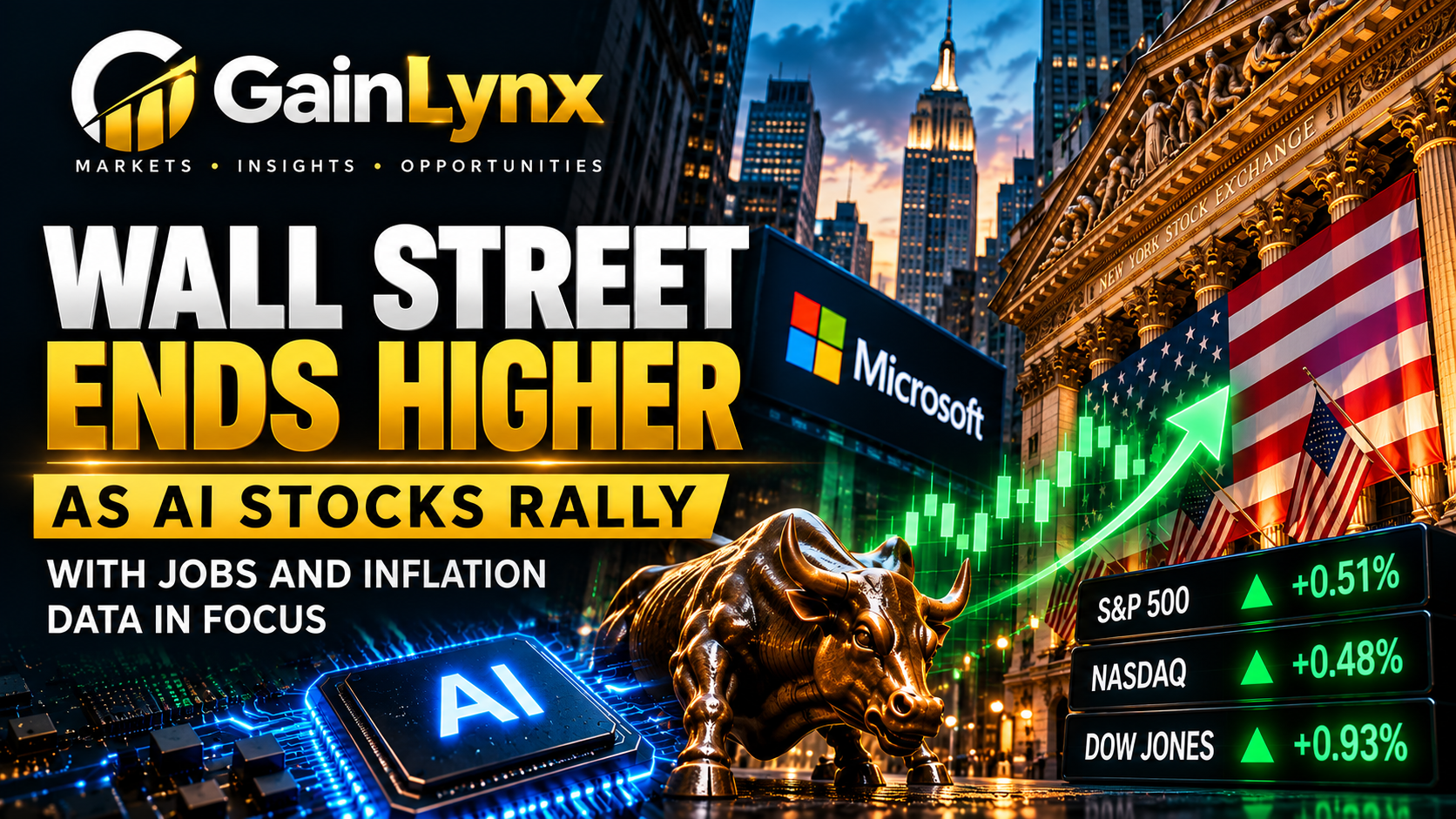

Wall Street ended Friday higher as renewed enthusiasm for artificial intelligence stocks helped major U.S. indexes advance, even as elevated Treasury yields and oil prices continued to challenge investor sentiment.
Microsoft led gains among major technology names after unveiling new artificial intelligence capabilities, while investors also responded positively to fresh AI-related corporate spending and deals.
However, the market now faces another important test. Investors are turning their attention toward upcoming U.S. employment and inflation data, which could influence expectations for the Federal Reserve’s next interest-rate decisions.
Wall Street Finishes Friday in Positive Territory
The three major U.S. stock indexes finished the September 25 session higher.
- S&P 500: rose 0.51% to 7,743.41.
- Nasdaq Composite: gained 0.48% to 27,068.72.
- Dow Jones Industrial Average: climbed 0.93% to 51,828.62.
Technology was among the stronger areas of the market. Still, Friday’s gains came after a volatile week in which investors had to balance renewed AI optimism against concerns about high energy prices and rising bond yields.
For the week, the S&P 500 gained about 1.2%, while the Nasdaq advanced roughly 2%.
Microsoft Leads the AI Trade
Microsoft was one of Friday’s standout performers, climbing about 3.7% after the company unveiled additional capabilities for its Copilot platform, including new coding and agentic AI tools.
The move reinforced investor interest in companies positioned to benefit from continued spending on artificial intelligence infrastructure and applications.
Other technology stocks also participated in the advance. Qualcomm gained around 4%, while Dell rose approximately 5%.
Akamai Gains on Major Anthropic Deal
AI enthusiasm was not limited to the largest technology companies.
Akamai Technologies rose about 3.2% following an $11.6 billion cloud-services agreement with Anthropic. The deal also includes a warrant that could potentially give Anthropic a stake of up to 5% in Akamai.
For investors, deals of this scale provide another indication that substantial capital continues to flow into the infrastructure required to support AI applications.
AI Optimism Returns to U.S. Equity Funds
The renewed enthusiasm surrounding artificial intelligence has also appeared in fund flows.
U.S. equity funds recorded their first weekly inflow in five weeks during the week ended September 25, supported by demand related to AI applications and data infrastructure.
That does not eliminate the risks facing equities, but it suggests that investor appetite for AI-linked opportunities remains significant.
Treasury Yields and Oil Remain Key Risks
Despite Friday’s gains, the macroeconomic backdrop remains challenging.
U.S. Treasury yields have risen sharply, increasing borrowing costs and putting pressure on equity valuations. At the same time, oil prices remain elevated, keeping inflation risks in focus.
Higher yields can be particularly important for growth and technology stocks because investors often value these companies based heavily on expected future earnings. As yields rise, those future earnings can become less valuable in present-value terms.
Therefore, the interaction between AI-driven earnings expectations, energy prices and interest rates could remain an important driver for Wall Street.
Jobs and Inflation Data Move Into Focus
Investors will now turn toward a busy U.S. economic calendar.
The September employment report will be closely watched for evidence about the strength of the labor market. Meanwhile, Personal Consumption Expenditures data will provide another update on inflation trends.
These reports matter because stronger-than-expected employment or inflation readings could affect expectations for the Federal Reserve’s interest-rate path.
As a result, markets may remain sensitive to economic releases even if enthusiasm around artificial intelligence continues to support technology stocks.
What Investors Should Watch Next
Several themes could determine whether Friday’s rebound develops into a broader move:
- U.S. employment data: Investors will assess whether the labor market remains resilient.
- PCE inflation: The Federal Reserve’s preferred inflation measure could influence rate expectations.
- Treasury yields: Further increases could create renewed pressure on equity valuations.
- Oil prices: Elevated energy costs remain an important inflation risk.
- AI investment: New deals, product announcements and capital spending could continue driving technology stocks.
Market Outlook
Friday’s session showed that artificial intelligence remains a powerful force in U.S. equity markets. Microsoft and other technology stocks helped Wall Street finish higher despite continued pressure from elevated oil prices and Treasury yields.
However, attention is likely to shift quickly toward the U.S. economy. Upcoming employment and inflation reports could reshape expectations for interest rates and influence whether the latest AI-driven gains can maintain momentum.
For now, investors are balancing two competing forces: enthusiasm over continued AI investment and concern that persistent inflation pressures could keep interest rates elevated.
Sources
Source: Reuters — Wall Street ends higher as investors buy AI stocks; Microsoft rallies
Source: Reuters — Jobs report and inflation data to test the U.S. rate outlook
Disclaimer: This article is for informational purposes only and does not constitute financial or investment advice. Financial markets involve risk, and readers should conduct their own research before making investment decisions.
