
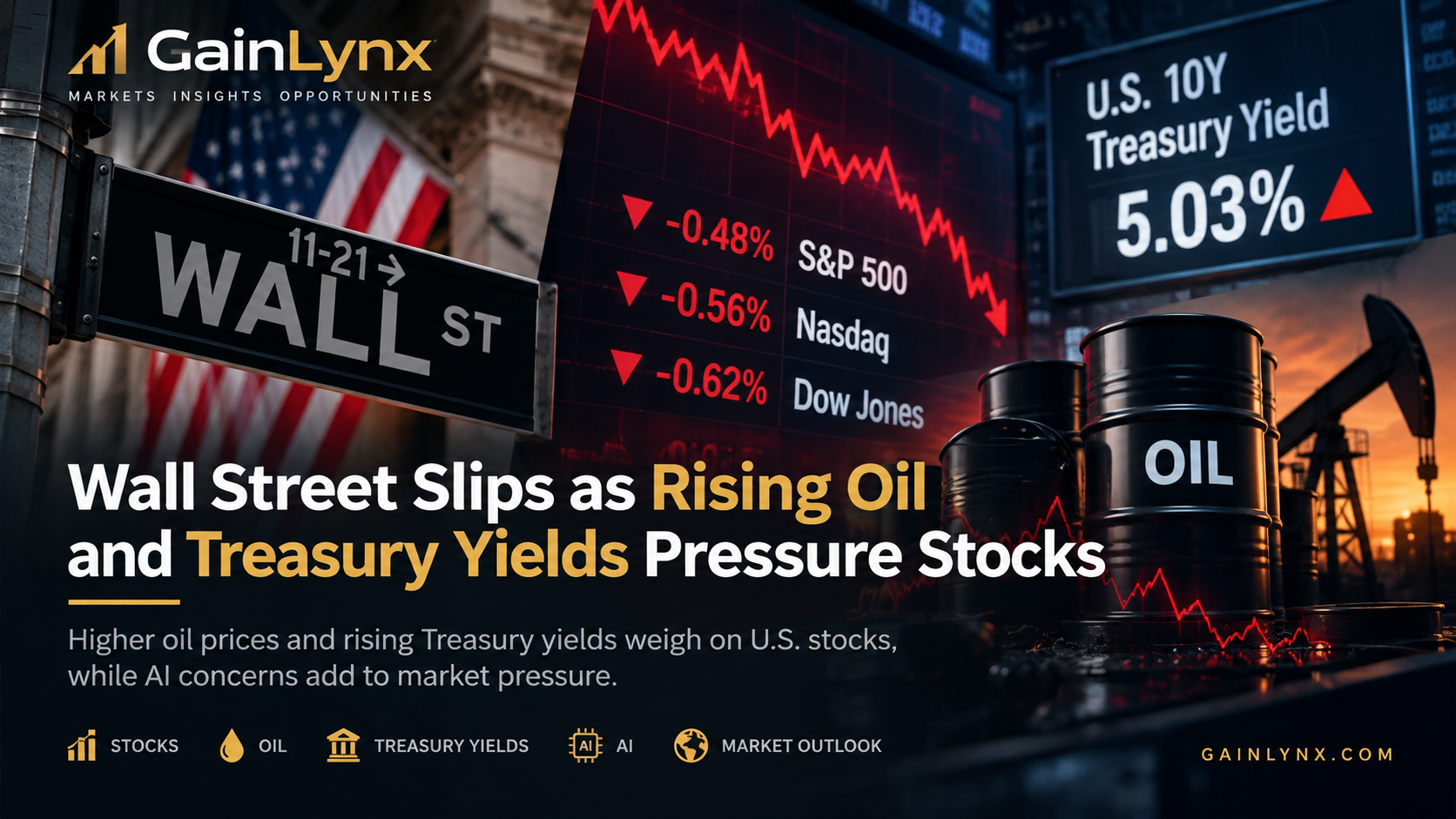

Wall Street Slips as Rising Oil and Treasury Yields Pressure Stocks
U.S. stocks came under pressure as investors faced a challenging combination of elevated oil prices, rising Treasury yields and renewed concerns surrounding highly valued technology and artificial intelligence shares.
The latest market moves highlight how quickly expectations for interest rates, inflation and economic growth can influence sentiment on Wall Street.
Rising Treasury Yields Pressure Equities
Higher Treasury yields can create headwinds for stocks because they increase borrowing costs and make government bonds more competitive with equities.
Technology and other growth-oriented companies can be particularly sensitive to changes in yields because a larger portion of their valuations is often linked to expectations for future earnings.
As yields rise, investors may reassess how much they are willing to pay for those future profits.
Oil Prices Add to Inflation Concerns
Elevated oil prices are creating another challenge for investors.
Higher energy costs can increase expenses for businesses and consumers while also contributing to inflationary pressure. Persistent inflation could make it more difficult for the Federal Reserve to move toward lower interest rates.
For equity investors, the combination of higher oil prices and elevated bond yields can therefore create a more difficult environment.
Technology and AI Stocks Remain in Focus
Artificial intelligence has been one of the dominant investment themes in global markets, but high valuations have also increased scrutiny of major technology companies.
Investors are increasingly focused on whether earnings growth can justify the expectations already reflected in share prices.
When bond yields rise or risk appetite weakens, expensive growth stocks can experience larger swings as investors reconsider their exposure.
Why Bond Yields Matter for Wall Street
The U.S. Treasury market plays an important role in the valuation of financial assets.
Higher yields can raise the discount rate investors use when estimating the present value of future corporate earnings. This can put downward pressure on stock valuations, particularly when yields rise rapidly.
Bond-market movements can therefore have significant consequences for the S&P 500, Nasdaq and other major equity benchmarks.
What Investors Should Watch Next
Investors will continue monitoring Treasury yields, oil prices and signals from the Federal Reserve.
Upcoming economic data could also influence expectations for inflation and interest rates, potentially creating additional volatility across U.S. equities.
The performance of major technology companies will remain important because of their significant weight in leading U.S. stock indexes.
Markets could remain sensitive to any development that changes expectations for inflation, economic growth or monetary policy.
GainLynx will continue tracking the major forces shaping U.S. stock markets and global investor sentiment.
Sources
Reuters — Wall Street Futures Slip as Rising Oil and Treasury Yields Pressure Markets
U.S. Treasury — Daily Treasury Par Yield Curve Rates
U.S. Energy Information Administration — Petroleum & Other Liquids
